
"coffee farming Tanzania"
900 article(s) found

More than 85% of the coffee farms in Arusha, Tanzania, are grown by small farmers.
Coffee exports from Tanzania (Tanzania) play an important role in the whole national economy. In the past, the coffee industry in Tanzania has been dominated by manor cultivation, but now more than 85% are grown by small farmers. Many small farmers form cooperative organizations, the most important of which is the Kilimanjaro Cooperative Alliance (Kilimanjaro Cooperative Union, referred to as KNCU)
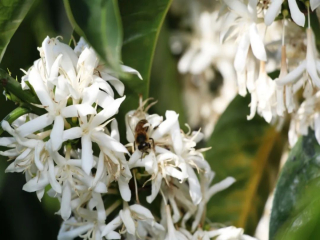
Coffee tourism is booming in Tanzania
Agricultural tourism is described as the combination of agricultural production (or processing) and tourism to attract tourists to farms, pastures or other agricultural enterprises for entertainment or study, while generating income for related places. In Tanzania, coffee tourism is on the rise. Tourists fly from all over the world to Tanzania to visit coffee farmers

A brief introduction to the Market Price of fragrant Kilimanjaro Coffee varieties in Tanzania
Workers earn their wages by collecting the number of coffee fruits. Small farm women use their hand-made sacks to bring coffee fruits to the farm to calculate capital. Tanzania's main coffee producing area is located at the foot of Mount Kilimanjaro, which is rich in volcanic soil. some coffee trees planted here are more than 100 years old. the earliest coffee was introduced by Christians from Kenya and began to grow coffee.

Tanzania coffee boutique coffee beans introduce flavor and taste manors in producing areas
Wheat: the national average annual output of wheat is 70, 000 tons, and the largest wheat production unit is the HANNANG wheat complex, which is composed of several farms with a total planting area of 4000 hectares. These farms are located in the Hannang district of Arusha and are all autonomous subsidiaries of NAFCO. In the 1970s, NAFCO developed and operated these with the help of the Canadian International Development Agency (CIDA).

Introduction to the quality of coffee beans in Tanzania
Coffee is one of the main cash crops in Tanzania, ranking fourth after cotton, tobacco and cashew nuts, mainly sold to Italy, Japan and the United States. Coffee exports play an important role in the national economy of Tanzania. Tanzania's main coffee producing area is located at the foot of Mount Kilimanjaro, which is rich in volcanic soil.

Tanzania Kilimanjaro Coffee Flavor description Taste Variety characteristics region introduction
Tanzania Kilimanjaro Coffee Flavor description Taste Variety characteristics the producing area introduces the export of Kilimanjaro coffee, but in addition to Mount Kilimanjaro, there are several major coffee producing areas throughout Tanzania, and there are more small farms in other areas. most small farms also have a planting area of several hundred mu, and some have their own washing equipment and bean drying farms, but graded treatment is still necessary.

Medium alcohol Tanzanian coffee Flavor Taste Manor Features Fine coffee Introduction
Tanzania's eastern coastal areas and inland parts of the lowlands belong to the savanna climate, the western inland plateau belongs to the tropical mountain climate, most of the average temperature of 21-25℃. More than 20 islands of Zanzibar have a tropical maritime climate, hot and humid all year round, with an average annual temperature of 26℃. [6]Rainfall types are divided into bimodal distribution and unimodal distribution. Areas with bi-modal rainfall include

Introduction of Fine Coffee beans in Arusha Coffee Manor, Tanzania
In October 2000, the Revolutionary Party won the second multi-party election by an absolute majority. However, the opposition Civic United Front refused to recognize the results of the Sang Island election and called on its supporters to hold protests, sparking large-scale bloodshed. The Mkapa government has taken resolute measures to maintain social order, while having dialogue with the opposition parties to promote the signing of a reconciliation agreement between the ruling and opposition parties, thus maintaining social stability.

Introduction of exquisite coffee beans in Tanzania coffee flavor manor area
In October 2000, the Revolutionary Party won the second multi-party election by an absolute majority. However, the opposition Civic United Front refused to recognize the results of the Sang Island election and called on its supporters to hold protests, sparking large-scale bloodshed. The Mkapa government has taken resolute measures to maintain social order, while having dialogue with the opposition parties to promote the signing of a reconciliation agreement between the ruling and opposition parties, thus maintaining social stability.

Full-bodied and refreshing taste of Tanzanian coffee flavor manor area characteristics of boutique coffee beans introduced Qili
Beans are often specially selected and expensive, but sometimes they taste like moldy beans, which is not in line with their price. As we all know, garden beans have become a unique flavor of coffee, and sell well in the United States, favored by many roasters. Tanzania is a potential coffee, but sometimes its flavor is not really shown. One of the reasons

Introduction to the characteristics of Tanzania Coffee Flavor Manor
In 1886, Tanganyika Inland was placed under the German sphere of influence. In November 1917, British forces occupied the whole territory of Tanganyika. In 1920, Tanganyika became a British mandate. In 1946, the United Nations General Assembly adopted a resolution to change it into a British trust. On May 1, 1961, Tanzania achieved internal autonomy. On December 9 of the same year, independence was declared, and the Republic of Tanganyika was established a year later. Zanzibar became a British guarantor in 1890

Description of coffee flavor in Kilimanjaro, Tanzania introduction to the treatment of grinding degree and baking degree
Tanzania is an East African country south of the equator, bordered by Uganda and Kenya to the north and the Republic of the Congo, Rwanda and Burundi to the west. It is hot and humid all the year round, with an average temperature of 21-25 ℃ in most areas. Precipitation is divided into long and short rainy seasons, and the annual precipitation is abundant. The economy is based on agriculture, coffee is one of the main cash crops in Tanzania, in Tanzania, Arabica coffee

Description of Coffee Flavor of Kanuovu Cooperative Karov Cooperative in Tanzania
Professional barista exchanges please follow the coffee workshop (Wechat official account cafe_style) Tanzania Kanuovu Cooperative Karov Cooperative Tanzania is located in East Africa connected to seven countries, the most famous chimpanzee (Dr. Jane good) Gombe National Park is home to many animals.

Introduction to the flavor and taste of Arusha Coffee Manor in Tanzania
In October 2000, Mkapa was re-elected president of the United Republic, and Karume, a candidate of the Revolutionary Party, was elected president and repeatedly expressed his position of safeguarding national unity, which further dealt a blow to the separatist forces. Since 2001, the coalition government has continued to consolidate the situation of unity, maintain the coalition regime, strive for moderate forces, crack down on the separatist forces in Zanzibar, and allocate budgetary funds and other matters related to Sang.

An introduction to the flavor and taste of Tanzania's boutique coffee beans.
Coffee is one of the main cash crops in Tanzania, ranking fourth after cotton, tobacco and cashew nuts, mainly sold to Italy, Japan and the United States. Coffee exports play an important role in the national economy of Tanzania. Tanzania's main coffee producing area is located at the foot of Mount Kilimanjaro, which is rich in volcanic soil.

A brief introduction to the flavor and aroma characteristics of Kilimanjaro coffee beans with light sour taste
Kilimanjaro coffee is a uniform size of large coffee beans, the color is gray-green, compared with a strong sour and sweet flavor, excellent flavor. Medium baking will give off sweetness and light sour taste, deep baking will produce soft bitterness, suitable for blending. Brewing method editor Kilimanjaro coffee is mainly suitable for blending and mixing, you can mix it yourself.

Introduction to Tanzania Coffee with endless aftertaste and Fine Coffee in Manor
Tanzania is one of the birthplaces of ancient humans. BC had trade with Arabia, Persia, India and other places. In the 7th and 8th century, Arabs and Persians immigrated in large numbers. The Arabs established the Islamic kingdom at the end of the 10th century, and the Persians established the Zanzibar empire on the eastern coast of the mainland. [3] in 1886 Tanganyika inland was placed under the German sphere of influence, 19

Excellent taste of Arusha coffee estate in Tanzania. Flavor characteristics
The Tanzanian flag is rectangular in shape and has a length to width ratio of 3:2. The flag is composed of green, blue, black and yellow. The upper left and lower right are two equal right triangles of green and blue. The black wide strip with yellow edge runs obliquely from the lower left corner to the upper right corner. Green represents land and Islam; blue represents rivers, lakes and seas; black represents African blacks

Introduction to the light sour coffee flavor and taste of the coffee manor in Arusha, Ethiopia
On January 12, 1964, the Sang people overthrew the sultan and founded the Zanzibar people's Republic. Tanganyika and Zanzibar formed a United Republic on April 26, 1964. On October 29 of the same year, the name of the country was changed to the United Republic of Tanzania. Julius Cambara Ginerere was the founding president and was re-elected twice until he resigned voluntarily in 1985. Mwinyi was elected on October 27th of the same year.